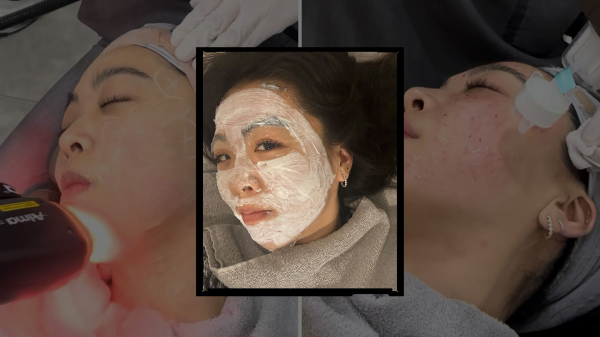
An Insider’s Guide to the Best Beauty Treatments in Seoul

 Courtesy of subjectSave this storySave this story
When I arrived in Korea last fall, I had one goal: to rest. By that point, I had been a beauty editor for over a decade, and somewhere in the churn of constant deadlines and unrelenting product launches, I'd lost the plot. It’s not that I fell out of love with beauty—never—I just forgot what it felt like to be in it for myself. I wanted a break, a moment to reset. And as a Korean American who dreamed of living abroad someday, Seoul felt like exactly the right place to land when I needed a reminder of who I was outside of a job title.
What I didn't expect was for beauty to find me anyway—which, in hindsight, was ridiculous given the country is a mecca for it.
In the years I've been visiting, Korea has further cemented its place as the ultimate beauty destination. This comes down to three things: innovation, accessibility, and price. Treatments like skin-tightening Thermage, which can run $3,000 or more in cities like New York and Los Angeles, cost half as much or less here. The market is also hyper-competitive, which means the standard of care is high and there's always something new to try. For the beauty-obsessed, there is simply nowhere better.
The biggest challenge? Knowing which treatments to choose and how to book them. After spending a year entrenched in Seoul’s beauty scene, I've learned a lot—and I want to share it all. Ahead: the most popular procedures that live up to their hype, a few lesser-known options worth adding to your itinerary, and some guidance on booking.
How to Book Beauty Treatments in Seoul
Navigating Seoul's beauty landscape for the first time can feel overwhelming. The clinics are plentiful, the treatments are endless, and though some places offer on-site translators, there are nuances that can be lost in translation. Having spent a year figuring it out myself—and helping visiting friends and family do the same—here's what I'd advise.
Start With Apps
“The three main platforms used in Korea are Gangnam Unni, Yeoshin Ticket, and Babitalk,” says Jeon In, a manager at Baid Clinic in Gangnam. All of them let you browse clinics, compare prices, read reviews, and in the case of Gangnam Unni and Yeoshin Ticket, you can book appointments directly through the app. (Babitalk functions more as a review and consultation forum than a direct booking platform.) “These apps are a nice starting point and give you a sense of what's available at what price. That said, not every clinic is listed on these platforms—some of the best ones aren't—so don't rely on them exclusively.”
Consider a Concierge Service
A good concierge does more than just book appointments for you. They help you manage scheduling around your travel itinerary and navigate language barriers before, during, and after your visits. "Patients coming to Korea often want to combine several services within a limited timeframe," says Donkyo Seo, CEO of HiMedi, a medical concierge service. “A concierge can help determine the appropriate order of treatments, and any pre- and post-care considerations, while ensuring it doesn't interfere with their travel schedules.”
If you're using a concierge for the first time, Seo recommends checking how they vet their partner clinics, which should be listed clearly on their website—ditto for their pricing policies. “You should never feel uncertain about pricing. The prices offered through your concierge should be equal to or better than when you book directly with the clinic,” says Seo. (Jeon adds that if you’re booking directly through a clinic, check that prices for local and international clients remain consistent, too, as this is unfortunately not always the case.)
Lastly, language support should be a given, not an add-on. “For a concierge service, offering language support throughout the entire process—from initial planning to any follow-up care—is a standard requirement,” says Seo.
Know Your Neighborhoods
Myeongdong is your best bet if it's your first time navigating Seoul's clinic scene. It's the most foreigner-friendly area in the city, with English-speaking staff more readily available than other neighborhoods.
Sinsa and Apgujeong are where I'd send anyone looking for more natural results. According to Jeon, “The practitioners here are highly skilled and tend to have a more considered, less aggressive approach.”
Gangnam is where you go if you want access to the latest trends and newest technology; it's the most competitive neighborhood in Seoul, which keeps standards of care high and treatment menus constantly evolving.
Cheongdam is the premium tier with a more private, exclusive atmosphere and a clientele that values discretion. (You may run into a K-Pop idol or actor here.) If budget isn't a concern, this is where to go for the full experience.
What to Do If Something Goes Wrong
Temporary discomfort or minor side effects, including light bruising, swelling, and embossing (small raised bumps that can appear after injections), may occur after some skin treatments. These symptoms usually go away on their own within a few days. “However, if you experience dermatitis, itching, blisters, or irritation that persist beyond this—or if these symptoms are disrupting your daily life, it’s best to visit the clinic immediately for further evaluation,” says Jeon.
For visitors who might not be able to do this, Jeon recommends consulting with the medical staff beforehand (especially if you have sensitive skin or pre-existing skin conditions). This way, you can get prescriptions for ointments, recovery creams, or oral medications in advance, should any post-procedure irritation occur.
The Best Beauty Treatments to Book in Seoul
Skin Boosters Skin boosters have been a cornerstone of Korean clinic culture for years, but the category is evolving quickly. These injectable treatments are designed to improve the quality of your skin (not alter the shape or structure of your face). With so many options available, a skin analysis—in which an AI-powered machine photographs your skin under multiple lighting conditions to reveal everything from pore size to hidden UV damage—has become the standard first step at most reputable clinics. This allows your provider to assess your skin thoroughly before recommending the right booster(s) for you.
Skin Botox (스킨보톡스)
“Skin Botox,” or micro-Botox, involves placing tiny, diluted doses of botulinum toxin just beneath the skin’s surface (whereas traditional Botox is placed in the muscles). These smaller, superficial doses can help minimize the appearance of pores, reduce oiliness, soften fine lines, and create a smoother overall finish without freezing your facial movements.
The results are even better when paired with other boosters. For me, Skin Botox works best with Rejuran or a hyaluronic acid booster like Skinvive; the combination of texture refinement and hydration hits differently than either treatment alone.
The only downside: it hurts. We're talking sharp, rapid-fire jabs across your entire face. I have a high pain tolerance and still teared up through the whole thing. A friend of mine sobbed to the point that I was summoned into her treatment room to hold her hand for the remainder of her appointment. Numbing cream is applied beforehand—and it helps, but only to a degree—so if you’re nervous, I’d ask for extra numbing shots to make the experience more tolerable.
Another note on pricing: Domestic botulinum toxin brands are significantly cheaper than others you might already know, such as Botox, Dysport, or Xeomin. Some of the most commonly used domestic brands in Korea include Meditoxin, Botulax, Hugel, and Nabota (which is FDA-approved for use in the U.S. under the name Jeuveau). Ask your clinic which brands they offer, and don't hesitate to discuss your preferences and budget at the consultation.
What to expect: Appointments typically last between 40 and 60 minutes, depending on how long your numbing cream is left on before the injections. Again, Skin Botox is spicier than other injectable treatments, so it's worth going in prepared. Some redness and swelling at the injection sites are normal and usually clear up within a few hours to a day; bruising may take a few days longer to fade.
Pricing: To give you a ballpark of the vast price difference between domestic and imported brands, the average cost of Medytox's Coretox, one of South Korea's premium products, starts around ₩60,000–200,000 (~$40–$135), whereas Allergan's Botox products range between ₩200,000 and ₩600,000 (~$135–$405). Note: These are estimates at the time of writing and are typical for clinics in Gangnam. Prices can vary by location.
Rejuran Healer
If you’re reading Allure, you’ve probably at least heard of Rejuran—if not by name, then as “the salmon sperm facial.” Let me be clear: This is an oversimplified and, quite frankly, sensationalized description of the treatment that’s not entirely accurate.
Yes, most Rejuran on the market is salmon-derived. And sure, it starts with fluid extracted from salmon milt (which includes sperm and seminal fluid), but the final product that makes it to your face contains no live sperm. Nada. Zilch. “What you get are highly purified DNA fragments (aka polynucleotides or PDRN) that are injected into the skin to promote regeneration, thereby encouraging improved elasticity, firmness, and texture,” explains Jeon.
Results build over multiple sessions, which is why most clinics recommend starting with a series of three treatments, spaced out every three to four weeks. This was one of the main reasons I was hesitant to give Rejuran a try: it’s an investment. That, and the fact that it’s notoriously painful with considerable downtime involved, mainly in the form of embossing that can appear at the injection sites. Unfortunately for my wallet, it was worth the hype. Fortunately for my skin, my face glowed like a supermoon once the bumps went down (about six to seven days post-treatment, in my case).
Now you might be thinking: If I’m only visiting for a few days, is it worth getting Rejuran once? In my experience, yes, but I want to level-set your expectations. That supermoon glow might not happen for everyone after just one session. As Jeon explains, “Rejuran is not a procedure that produces dramatic changes in a single session—it is a cumulative treatment. Nevertheless, even getting it once can help increase moisture and hydration levels in your skin and promote regeneration, which subtly brightens skin tone and softens the appearance of fine lines.”
What to expect: The procedure itself lasts between 20 and 30 minutes. "Numbing cream is used to minimize discomfort, and our medical professionals customize the injection amount and placement according to each patient's skin condition," says Jeon. "Post-treatment, expect redness and small bumps at the injection sites. This is a normal part of the process. Downtime averages anywhere from three to ten days, so schedule your treatment accordingly," she notes. Jeon also advises avoiding excessive heat in the days following treatment.
Pricing: Approximately ₩200,000–400,000 ($148–$296 USD) per session; three-session package approximately ₩650,000–900,000 ($481–$666 USD).
Re2O
Re2O has been gaining traction among locals since last year, and if you’ve been following K-beauty treatments on TikTok, you may have already heard of it—skin-savvy international visitors are increasingly requesting it too.
Re2O is positioned as a “next-generation” skin booster. “While most boosters center on a single primary ingredient like hyaluronic acid for hydration or PDRN for repair, Re2O takes a broader approach by using purified extracellular matrix (ECM) derived from processed donor [skin]. That means collagen and elastin all in one treatment,” says Jeon.
Once injected, ECM reinforces the skin’s foundation and signals your own fibroblasts to begin rebuilding from within. Because the collagen and elastin produced from this process are your own, the results tend to feel more substantial than what you might get from a traditional hydrating booster. Over time, the skin can look firmer and more resilient.
That said, Re2O is still in its early days, and though clinical data is starting to catch up, it isn't there yet. Results will depend on skin type, injection technique, and the consistency with which the treatment is maintained. (Like Rejuran, Re2O is often recommended as a series of three at monthly intervals, but the total number of treatments and timing can vary slightly by clinic.)
What to expect: The treatment itself runs between 20 and 40 minutes, with numbing cream applied beforehand to keep things comfortable. “Most patients notice some plumpness right after, though more visible changes develop in the weeks that follow. Over time, the skin can look firmer and more resilient,” says Jeon. “Some mild swelling or bruising may appear post-treatment, but it's typically short-lived, and most people are back to their routines within a day or two.”
Pricing: Approximately ₩600,000–1,000,000 (~$444–$740 USD) per session; package discounts are usually available for three or more sessions.
Non-Surgical Firming Treatments
Non-surgical lifting and tightening treatments like Ultherapy are arguably where Seoul's skin clinics shine brightest—and nowhere is the value gap more obvious. Both treatments are widely available in the U.S., but they're offered at a fraction of the price in Korea. (A number of my derm friends in New York get their yearly or biennial tune-ups in Seoul.)
Korea has also developed its own roster of lifting innovations—some more affordable alternatives to the international names, others distinct treatments with their own merits. The common thread between all of them: minimized downtime, real results, and the kind of careful, customized application that Korean clinics have built their reputation on.
Ultherapy (울쎄라)
Ultherapy was the first big treatment I booked in Seoul, and for good reason: it’s one of the most established non-surgical options for sagging skin. The device delivers microfocused ultrasound energy at multiple depths—including the SMAS, the fibromuscular layer beneath the skin and fat that surgeons target in a facelift—to stimulate collagen, resulting in a subtly lifted appearance.
Though Ultherapy is available worldwide, the difference here lies less in the technology and more in how it’s applied. According to Jeon, Seoul providers rely closely on the device’s real-time imaging to assess individual skin thickness and structure, adjusting depth and intensity accordingly. “It’s a level of customization that isn’t always standard elsewhere,” she says. (Ultherapy PRIME, a new version of the device that incorporates higher-resolution imaging and faster treatment times, is available in the U.S. as of 2024, but many offices still use the original version.) Based on my own experience in Seoul, I can attest that my dermatologist was incredibly meticulous, fine-tuning the settings as he worked on each section of my face.
What to expect: A numbing cream is applied and left on for about 30 minutes; the actual treatment takes anywhere from 30 to 90 minutes, depending on the areas being targeted. “During the session, you'll feel heat and a pulling sensation as the ultrasound energy reaches deeper layers. It’s generally manageable, though you may feel more discomfort in areas like the jawline or forehead, where there’s less padding,” explains Jeon. You may also experience some mild redness, swelling, or tightness immediately after, but most people are back to their normal routines the same day. Just make sure to avoid saunas and intense exercise for at least 48 to 72 hours following the treatment. Results appear gradually, beginning around the one-month mark as collagen regenerates, and can last anywhere from a year to 18 months.
Pricing: Approximately ₩250,000–500,000 (~$185–$370 USD) per 100 shots; most full-face treatments require 300–600 shots, depending on areas of concern. Varies by clinic, shot count, and equipment version (standard vs. PRIME).
Shurink (슈링크)
Shurink, one of South Korea’s most popular HIFU (high-intensity focused ultrasound) systems, works by delivering energy to the deeper layers of the skin, stimulating collagen production and lifting sagging tissue over time. It’s widely available and generally more affordable than other HIFU options (like Ultherapy), making it an appealing choice for locals and visitors alike.
The system mainly differs in how the energy is delivered. Treatments can cover more surface area per pass, so that sessions are shorter and more comfortable. However, most Shurink models don’t include real-time ultrasound imaging, which helps practitioners see soft tissue layers and deliver energy more precisely. Clinicians also note that Shurink is best suited for mild to moderate laxity, while higher-intensity devices may be preferred for more significant sagging.
TL;DR: For those with mild to moderate laxity and a tighter budget, Shurink is a solid option.
What to expect: The procedure lasts between 20 and 40 minutes, and numbing is optional, as most people describe the discomfort as mild (think gentle heat and pressure). Downtime is also minimal: any redness or swelling that appears post-treatment typically resolves within a day or two, making it one of the easier treatments to fit into a busy schedule.
Pricing: Approximately ₩150,000–300,000 (~$111–$222 USD) per session for standard areas; varies by clinic and shot count.
Radiofrequency Tightening
HIFU and radiofrequency tightening are sometimes mentioned in the same breath, but they do different things. HIFU penetrates deeper, targeting structural layers beneath the skin like the SMAS, while RF works within the dermis, delivering controlled heat to stimulate collagen and elastin production. The result is firmer, smoother skin that develops over time.
The good news is they’re not competing. And in fact, many clinics recommend combining the two as part of a broader protocol—a layered approach in which HIFU addresses foundational structures, and RF refines things closer to the surface, like fine lines and texture.
Note: If you're visiting Seoul for the first time and trying to keep things simple or stay within a budget, either treatment on its own is a solid place to start. Despite what you might be told (or sold), you don't need to do everything at once to see meaningful results.
Thermage
Thermage has been the gold standard in RF tightening for years, and Seoul is one of the best places in the world to get it. The quality is there, the expertise is there, and the price—compared to what you'd pay in the US—makes the decision easier for many.
The latest generation device, Thermage FLX, uses monopolar radiofrequency to deliver energy deeper into the skin than most RF devices. Monopolar technology works by sending energy from the handpiece through your tissue to a grounding pad placed elsewhere on your body (usually a large, muscle‑covered area like the lower back, abdomen, or thigh). This energy stimulates a wound‑healing response that leads to new collagen production over the following months, so you get a progressive improvement in firmness.
Tip: Thermage pricing in Seoul varies widely. Clinic location, practitioner, device generation, and shot count all factor in, so I’d suggest shopping around and consulting with at least two places before committing, as this is a larger investment.
What to expect: Numbing cream is applied beforehand. During the treatment, which can last between 45 and 90 minutes, you’ll feel a moderate heat sensation (though some people report that it can feel more intense). There’s minimal downtime, with some redness typically resolving within a day or two. Most people report seeing the full effects between three and six months after treatment, so it’s definitely a slow burn, but results can last anywhere from one to two years, depending on the condition of your skin to start.
Pricing: Full face (600 shots): approximately ₩1,000,000–2,800,000 ($770–$2,150 USD); Full face and neck (900 shots): approximately ₩2,000,000–3,800,000 ($1,540–$2,900 USD); Eye area or smaller zones: approximately ₩800,000–1,500,000 (~$615–$1,150 USD)
Oligio (올리지오)
Oligio is to Thermage what Shurink is to Ultherapy: another homegrown alternative that delivers comparable results at a lower price. Developed by the Korean medical device company Wontech, it uses the same type of monopolar RF technology as Thermage.
Oligio is a favorite among locals who want firmer skin without paying a premium for the Thermage name. As such, it's found at clinics throughout Seoul and is considered a great starter option for those new to tightening treatments.
So why would someone pay a premium for Thermage when Oligio exists? Well, the former has decades of published clinical data behind it. It’s been studied worldwide, which gives it a level of credibility that Oligio, as a newer device, doesn’t have yet. Some practitioners also claim that Thermage FLX offers more nuanced control over energy delivery.
For patients with more pronounced skin laxity or those seeking maximum lift, many dermatologists still favor Thermage. Oligio tends to perform better for early to moderate laxity and is often recommended as a maintenance treatment or first‑time option.
What to expect: Each session lasts 30 to 60 minutes, with numbing cream applied beforehand. During treatment, you can expect a mild heat sensation throughout—nothing sharp or particularly uncomfortable. Downtime is minimal, with any redness typically resolving within a day, making it easy to return to your normal routine almost immediately.
Pricing: Approximately ₩400,000–900,000 (~$296–$666 USD) per session for full face; varies by clinic and treatment area.
Titanium Lifting (티타늄 리프팅)
Titanium lifting is very much an IYKYK treatment—the kind that celebrities quietly get before a big project or photoshoot; I tried it for the first time before a friend's wedding last spring and was pleasantly surprised by the subtle lift and immediate glow it delivered.
“Titanium lifting uses multi‑wavelength laser energy to penetrate the dermis and stimulate collagen regeneration, simultaneously improving skin tone and texture. The fact that it addresses lift and luminosity in a single session is what keeps people coming back to it,” explains Jeon (who turned me onto the treatment).
Tip: Many clinics recommend pairing it with a skin booster for enhanced results, which is exactly what I did. My choice? A cocktail of Skin Botox and Rejuran to boost hydration and help with a faster recovery.
What to expect: Titanium lifting is one of the more accessible treatments on this list, in every sense. Sessions run around 30 minutes, require little to no numbing, and any discomfort you may feel is extremely mild. “A little warmth, maybe some light vibration,” says Jeon. Afterward, you might notice some redness or flushing, but the best part? There's no real downtime, so most people can resume their regular schedules right after their treatment.
Pricing: Approximately ₩200,000–400,000 ($148–$296 USD) per session; full face or extended package approximately ₩700,000–1,200,000 ($518–$888 USD).
XERF
XERF is newer to the scene but already generating serious buzz. In full transparency, I haven't tried it yet, but it comes highly recommended by a trusted derm friend, so it’s at the top of my list when I return to Seoul this spring.
XERF deploys radiofrequency energy at two different frequencies that target the dermis and SMAS, respectively. It's all about precision here: minimizing surface damage while maximizing the collagen and elastin response in the deeper layers of your skin. The result is a firming and lifting effect that’s also more comfortable for the patient, thanks to its built-in cooling system.
Many Seoul clinics are already pairing it with HIFU as part of a more comprehensive lifting regimen, with HIFU handling the foundational structures, and XERF targeting the mid-layers. The logic is sound, and from everything I've seen so far, the results are hard to argue with. Consider this one flagged for follow-up!
What to expect: Sessions last 30 to 60 minutes, with numbing cream applied beforehand. Plan for some mild redness and potential swelling post-treatment; it typically resolves within three to five days. Most clinics recommend avoiding sun exposure and heat for 48 to 72 hours afterward, so factor that into your scheduling if you have any outdoor activities or sauna time planned.
Pricing: Approximately ₩800,000 – ₩1,500,000 per session ($535–$1,004 USD).
Skin Tone & Brightening Lasers
This is the category I was most consistent with during my time in Seoul. The results were never dramatic, but they built up until one day, you just notice your skin looks different. Brighter. Clearer. Smoother.
I initially went in to address some sunspots I’d accumulated from years of living by the beach and a few stubborn post-inflammatory hyperpigmentation marks left over from past breakouts. My dermatologist recommended a combination approach using various lasers (specifically V-Beam, Genesis, and Pico) spaced out over a few months.
This is a slow game, folks. Some of the discoloration these lasers target lies beneath the skin's surface and is invisible to the naked eye. There were many weeks when I’d stare in the mirror and wonder if I was pouring money down the drain. Thankfully, most clinics offer photo comparisons that prove the treatment is working, even when the mirror doesn't.
V-Beam
V‑Beam is a pulsed dye laser that targets redness and vascular concerns—think rosacea, red acne marks, broken capillaries, and flushing. It works by delivering concentrated light energy to blood vessels beneath the skin’s surface; the targeted heat causes the vessel walls to break down, allowing them to be gradually reabsorbed by the body, fading their appearance.
It’s not an instant fix: a series of sessions is typically recommended, and results build progressively over weeks and months. But for anyone dealing with persistent redness or vascular discoloration, it’s one of the most effective tools available. (I’m currently five sessions in for telangiectasia, aka spider veins that resulted from the radiation I received years ago, and so far there’s been significant enough improvement that I’ve committed to five more sessions.)
What to expect: Sessions run between 15 and 30 minutes, and numbing cream isn't typically required, though I opt for it. During treatment, expect a mild stinging sensation that’s noticeable but manageable. Some redness and light bruising after treatment are normal and tend to resolve within a few days. Most clinics recommend a series of three to five sessions, spaced every three to four weeks, to see meaningful results.
Pricing: Approximately ₩100,000–300,000 (~$74–$222 USD) per session.
Genesis
Genesis is a gentle, non-ablative laser that delivers low-level heat into the dermis to stimulate collagen production, even out redness, refine the appearance of pores, and improve overall tone and texture. It's described as a “lunchtime laser,” and the name is well-earned: sessions are quick, and there’s essentially no downtime.
You may notice a subtle glow after just one or two sessions, but Genesis rewards consistency: skin becomes progressively smoother, more even, and more luminous. It pairs particularly well with other lasers, such as V-Beam, and is often recommended as part of a combined package for broader tone correction. It’s also not uncommon for clinic regulars to get Genesis as a monthly maintenance step in their routines.
What to expect: Treatment takes 20 to 30 minutes per session. No numbing is required, and you’ll feel a mild heat during treatment. A series of four to six sessions, spaced every two to four weeks, is typically recommended.
Pricing: Approximately ₩80,000–200,000 (~$59–$148 USD) per session.
Pico Laser
Pico lasers deliver ultra-short bursts of energy into the skin to break up unwanted pigment—like those aforementioned sunspots and past acne marks—into tiny fragments that the body gradually absorbs and clears on its own. Because the pulses are so fast, pico lasers tend to be gentler and generate less heat in the surrounding tissue than older lasers, reducing (though not eliminating) the risk of post-inflammatory hyperpigmentation.
For more significant concerns, such as melasma (which is notoriously stubborn, though Pico is considered one of the better laser options for it), a series of sessions is needed to see substantial improvement. But if you're short on time, as is usually the case when traveling, one or two treatments can still offer a noticeable brightening and evening-out effect.
What to expect: Sessions run between 20 and 30 minutes, with numbing cream applied beforehand. During the treatment, you can expect a mild snapping sensation—like a rubber band against the skin—which is just about as uncomfortable as it gets. Some redness and light peeling is normal and typically resolves within two to five days. As with any laser treatment, double down on your SPF; your skin is more sensitive afterward, and even a little sun can undo or slow progress.
Pricing: Approximately ₩100,000–400,000 (~$74–$296 USD) per session.
Add-ons You Shouldn’t Miss
LDM Facial (저주파 초음파 관리)
LDM (short for local dynamic micro‑massage) is one of my favorite treatments to get in Seoul, and honestly, one of the most underrated. The device uses dual-frequency ultrasound energy to gently stimulate the skin, helping to calm inflammation, support recovery, and encourage circulation—with zero downtime.
While it's not a dramatic treatment by any means, your skin looks imperceptibly better afterward. More even, refreshed, and just happier. Part of that might simply be because it feels really nice. Quite pampering, even, which is probably why some clinics offer it as a complimentary service after more intensive procedures to help soothe the skin and speed up recovery.
This is one of the few treatments you don't have to overthink, and it’s an excellent choice right before a special event or when your skin needs extra TLC (like when you’ve just stepped off a transatlantic flight). My only other advice is to book your LDM facial in the area where you're staying; there’s really no need to trek over to, say, Cheongdam for a fancy experience. I’ve had plenty of great facials at my neighborhood clinic—and my aunt’s, for that matter.
What to expect: An LDM facial runs between 20 and 30 minutes, no numbing required. As I said, it feels relaxing (like a not-too-hot stone massage), and you can walk straight out of the clinic and back into your day, making it one of the lowest-commitment treatments on this list.
Pricing: Approximately ₩50,000–150,000 (~$37–$111 USD) as a standalone treatment; frequently included as a free add-on with larger treatment packages.
Cortisone Shots (스테로이드 주사)
Every month, like clockwork, I get a few angry pimples on my face, and it’s always in prominent spots that no amount of concealer or dim lighting can cover. I’ve found that the best plan of attack for these guys is a cortisone shot, which can be both cumbersome and prohibitively expensive.
In the U.S., getting a cortisone shot typically means calling your dermatologist, hoping they have a last-minute opening, and paying anywhere from $150 or more for the privilege. In Seoul, you can walk into almost any dermatology clinic, point at the offender, and walk out ten minutes later having paid less than $10. I'll say that again: less than $10 for a cortisone shot that will flatten most inflamed pimples within 24 to 48 hours.
On days when my skin was particularly inflamed, I’d hit it with a cortisone shot and LDM facial, which worked beautifully to calm everything down. Not to sound dramatic, but it's one of those small, almost mundane aspects of Seoul's beauty scene that feels sort of revolutionary once you've experienced it.
What to expect: Cortisone injections are quick—typically under 10 minutes—with minimal discomfort. Results are usually visible within a day or two, making it a genuinely useful tool to have in your back pocket when your skin needs immediate intervention.
Pricing: Approximately ₩5,000–15,000 (~$4–$11 USD) per injection.
Medical Pedicure (메디컬 페디큐어)
A medical pedicure is not the kind that includes a foot massage and polish change. It's a treatment—usually performed at a dermatology clinic or specialized foot care center—that addresses chronic issues, such as thickened or damaged nails, ingrown toenails, calluses, cracked heels, and other conditions that regular nail salons aren't equipped to treat.
I first decided to get a medi pedi because, after years of running and hiking, my feet were wrecked. Trust: no one wants these feet pics…anyway, after doing my due diligence, I found REFUSS, a specialized foot-care clinic with branches throughout Seoul. I ended up getting a series of treatments where my technician cleaned, filed, and smoothed my toenails and calluses in a way that felt corrective, in addition to improving their appearance.
In Seoul, this kind of treatment is readily available, competitively priced, and performed with a level of precision that's hard to find elsewhere. Which is why if you have any longstanding nail or foot concerns you've been half-heartedly managing (or ignoring altogether), a medical pedicure may be worth adding to your itinerary. I’m definitely scheduling another appointment before sandal weather hits.
What to expect: Sessions run between 30 and 60 minutes, based on the severity of your feet. There may be some mild discomfort during treatment, but it’s nothing unmanageable.
Pricing: In Seoul, medical or clinical foot care and cosmetic foot treatments generally range from ₩30,000–₩100,000 (approximately $22–$74 USD) per session, depending on the clinic and the complexity of the treatment. Dermatology and medical clinics tend to charge toward the higher end, while foot care clinics and salons are typically more affordable.
Vision Care
Vision correction might not be the first thing people think of when planning a beauty trip to Seoul, but it's increasingly on the radar of international visitors—and honestly, it should be. South Korea has become a popular destination for LASIK and other advanced vision correction procedures for many of the same reasons it leads in dermatology: high-end technology, experienced surgeons, and more competitive pricing than in the U.S. My aunt, who had LASIK done a few years ago, calls it one of the best decisions she's ever made (and has been low-key pressuring me to follow suit ever since).
LASIK remains a well-established option that uses laser technology to reshape the cornea and correct nearsightedness, farsightedness, and astigmatism. SMILE (Small Incision Lenticule Extraction) is a newer, less invasive procedure that uses a laser to create and remove a tiny corneal lenticule through a small incision rather than cutting a flap like LASIK. Because SMILE involves less disruption to the corneal surface, it can carry a lower risk of post-procedure dry eye and typically offers a smooth, relatively quick visual recovery.
What makes Seoul particularly appealing for visitors is the speed at which everything moves. "Whether it's as simple as getting prescription glasses or more involved procedures like SMILE or LASIK, the time required to complete these treatments in Korea is significantly shorter than what U.S. patients expect, while maintaining high quality,” says Seo.
What to expect: An initial consultation and a comprehensive eye examination are required before booking LASIK or SMILE; many clinics can schedule these on the same day or the next. The procedure itself is remarkably quick, typically taking about 10 to 20 minutes per eye. You can expect some light sensitivity, mild discomfort, and blurry vision in the first 24 to 48 hours, but many patients (including my aunt) report significant improvement shortly after. Practitioners recommend avoiding rubbing your eyes and steering clear of strenuous exercise and high-impact activities for at least the first week or two to support optimal healing.
Pricing: Standard LASIK: approximately ₩1,500,000–2,500,000 (~$1,110–$1,850 USD) per eye SMILE: approximately ₩1,800,000–3,000,000 (~$1,333–$2,220 USD) per eye (significantly lower than comparable procedures in the U.S., where LASIK typically runs $2,000–$3,000 per eye or more).
Dental Whitening (치아미백)
Teeth whitening wasn’t originally part of my plans; it was a spontaneous addition that became one of the highlights of my beauty treatments in Korea. Like vision care, dental care here is highly efficient. I booked a same-week appointment, walked into a spotless clinic, and left an hour later with noticeably brighter teeth. For something I’d half-considered, it genuinely exceeded my expectations. A friend noticed the difference the next day, and five months later, my smile remains bright (which is impressive considering how much coffee I drink).
Seo, who has observed a notable uptick in U.S. visitors seeking dental care, says it's one of the fastest-growing categories. "Demand for teeth whitening grew significantly in 2025, and is likely to expand into implants and premium veneers in 2026," he says.
What to expect: In-office whitening takes approximately 60 to 90 minutes. There’s low to mild sensitivity during treatment, and the results are visible immediately. The effects typically last six months to a year or more, based on diet, lifestyle, and maintenance habits.
Pricing: Approximately ₩150,000–400,000 (~$111–$296 USD) for in-office whitening, depending on clinic and method. Premium clinics in Gangnam tend to be on the higher end.
About Me

Chesung Subba
Author/Writer
Hello, I'm Chesung Subba, a passionate writer who loves sharing ideas, stories, and experiences to inspire, inform, and connect with readers through meaningful content.
Follow Me
Connect with me and be part of my social media community.
Leave a Reply